The garden · establishment year, 2026
From a string in the grass to a plot under cover
An in-ground vegetable garden in the back yard in Knoxville, zone 7b, on red clay, with twelve hours of sun. It started in June as a daily practice, forty-five minutes of clearing sod a strip at a time, in a grief season, before it had a plan. Eleven weeks of mornings later, it had three beds, two paths, a soil report, its amendments in, and a tarp over the whole of it until spring. This page is the running record. The tending is the practice; a harvest is the gift, not the deadline.
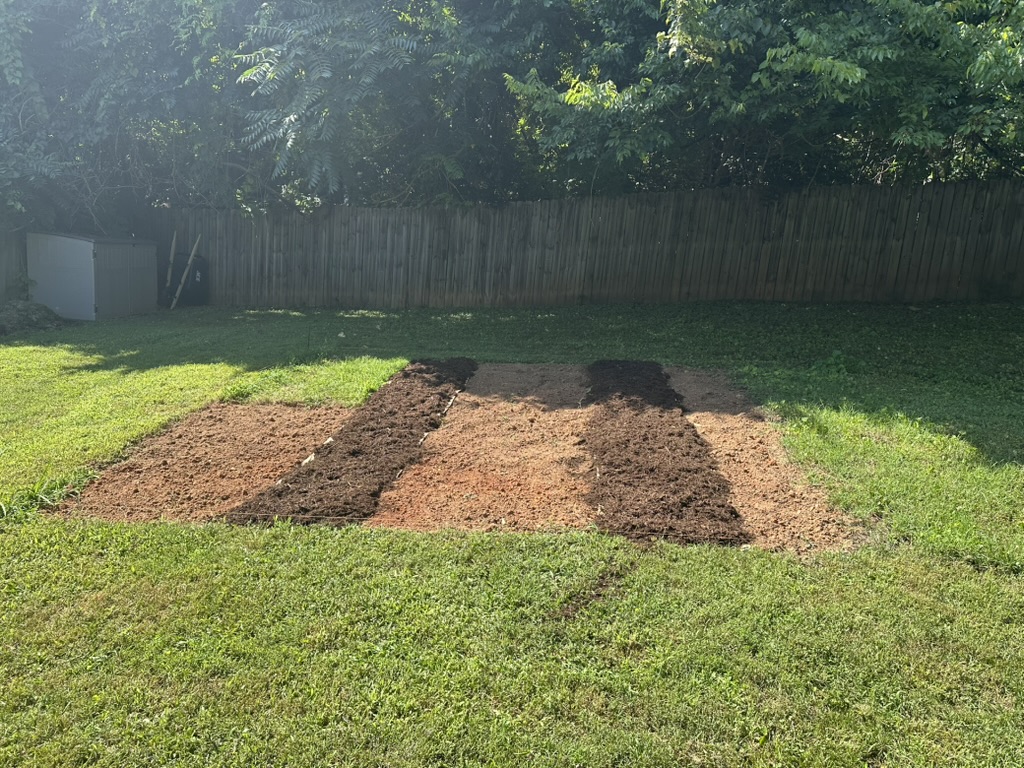
16 by 14 feet
Three four-foot beds, two two-foot paths: 168 square feet of growing ground.
Twelve hours
Direct sun, eight to eight. The hardest thing to fix was already handled.
pH 5.68
Moderately acid clay, headed for 6.1 under lime. Phosphorus low, potassium middling, zinc high.
Spring 2027
When the tarp comes off and the first seeds go in.
June
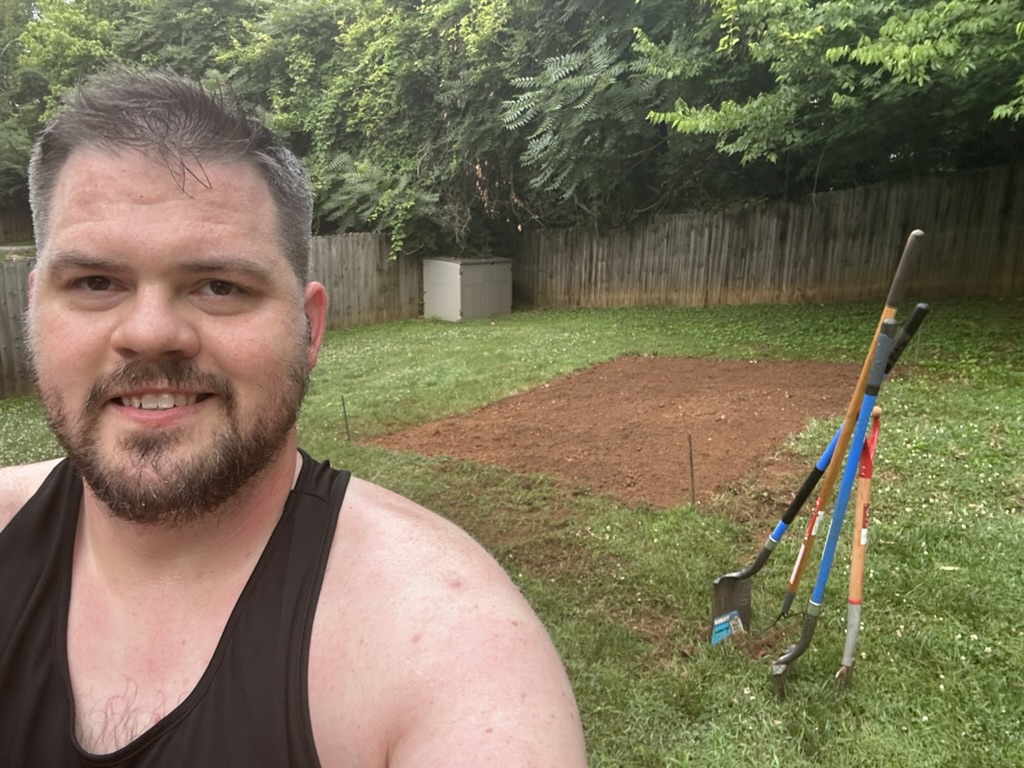
A string in the grass
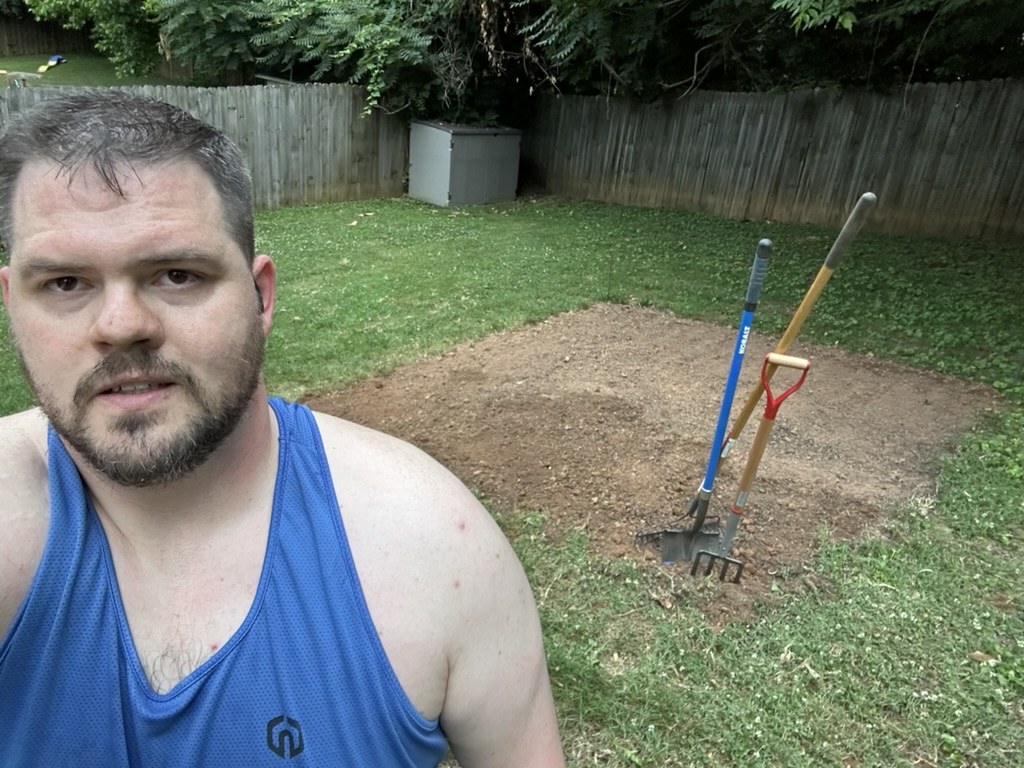
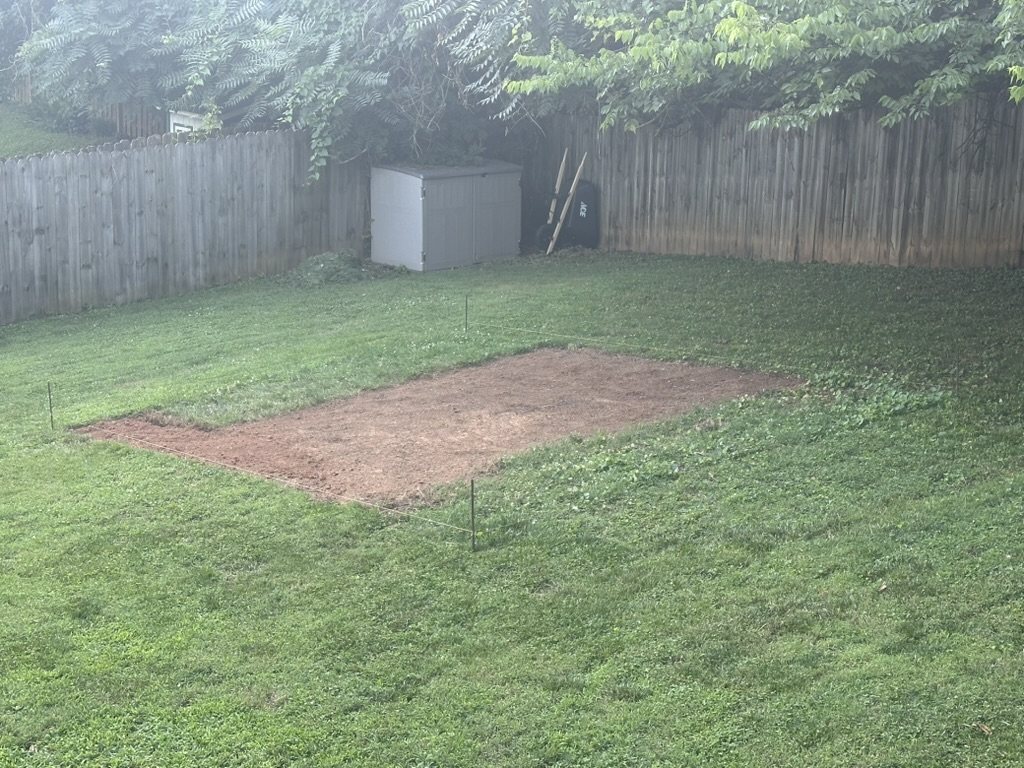
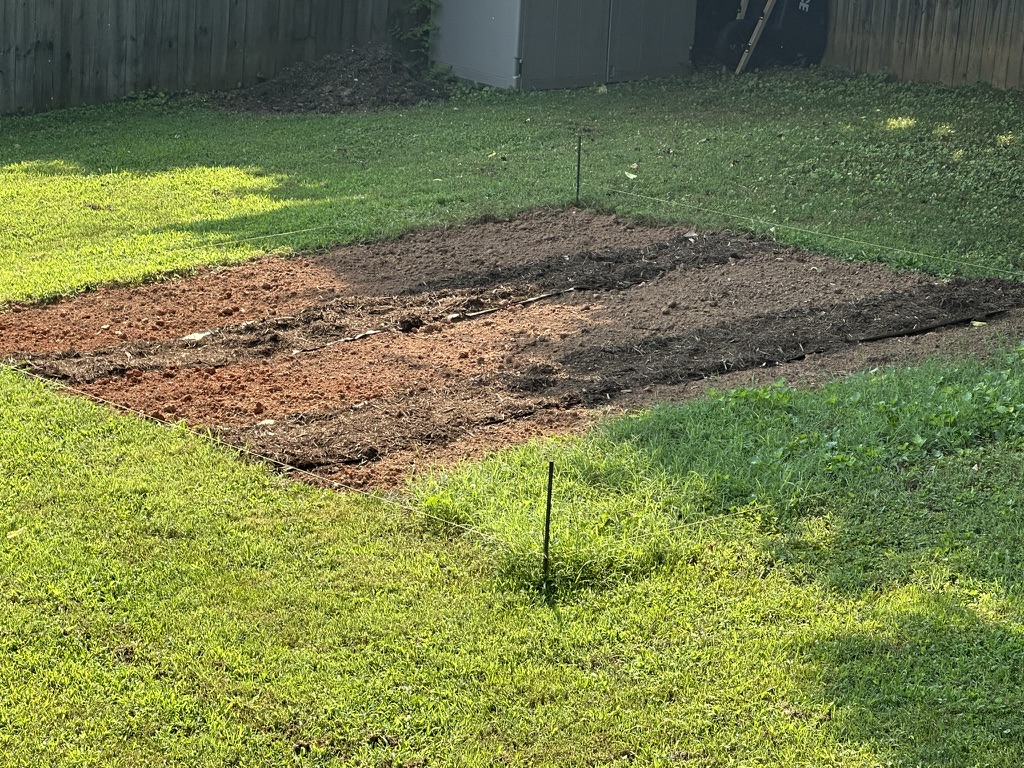
It began before there was a plan, and on purpose. Every morning, about forty-five minutes: a strip of sod a foot wide and ten feet long, lifted by hand with a fork and a spade, the clay underneath broken up, the grass carried off. That was the whole assignment. It started in the weeks after my grandfather died, and it was the first thing I did each day that asked nothing of me except that I show up with a fork.
Then came the reading. The plot gets direct sun from eight in the morning to eight at night, which meant the one site condition that can’t be fixed was already fine, and the work ahead was soil, not light. The soil is red clay. There’s a shaded corner under overgrown trees at the top, which turned out to be a feature, a cool spot for the tender greens or a staging corner, rather than something to rush to clear. The trees had to be identified before any of their branches went into a compost pile, because if one of them was a black walnut, its chips would poison the tomatoes.
Late June
Decisions, and the things I didn’t do
Wendell is the name I gave the advisor persona I think with, after Berry, an irony he’d see before I did, and most of what he did in June was talk me out of things. Asparagus, which wants three years and a permanent bed. Potatoes, deferred to spring. “Just plant something” without a soil test, replaced with “test the pH first, then plant a trial with your eyes open.” A rubber mulch that turned out to be in the soil already, left by a previous owner, which would matter more than I knew.
What got decided instead: a layout, argued back and forth between eighteen feet with four narrow beds and sixteen feet with three, and settled on three beds four feet wide, which is the width you can reach the middle of from either side, kneeling. Paths of cardboard under wood chips. A compost pile, sited, fed with grass clippings from a lawn that has never been treated. A soil test ordered from the university extension office. And a crop list that started from the kitchen, not from the seed catalog.
July 21
The paths go in
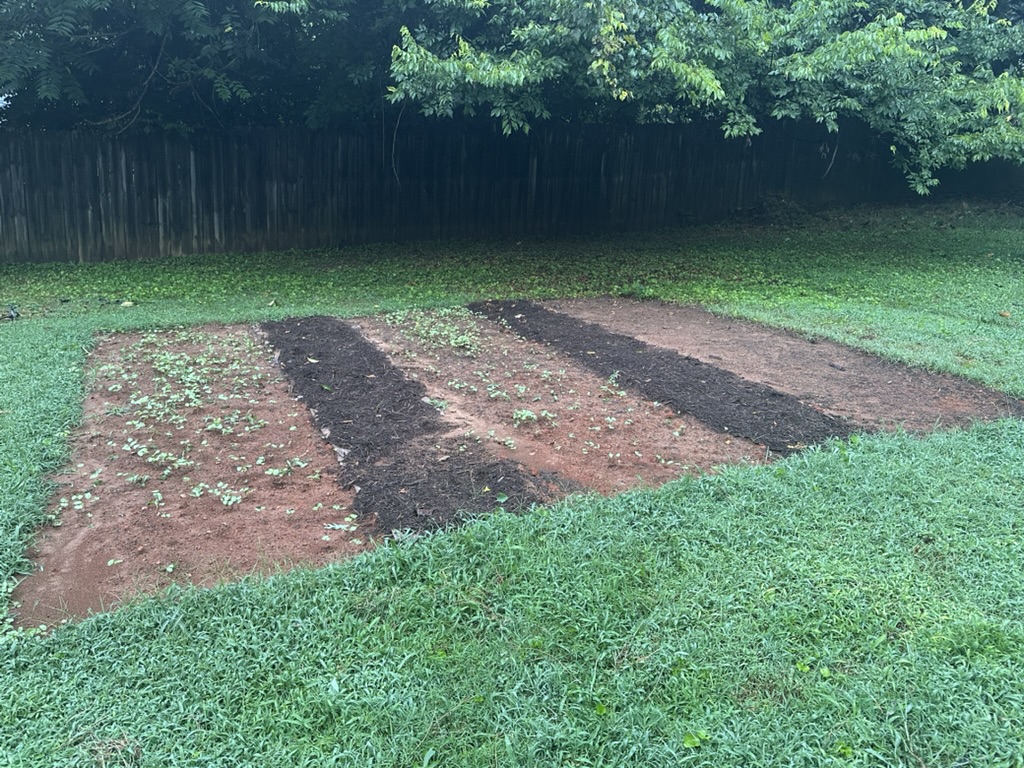
Two walking paths, each two feet by fourteen, laid as cardboard under a truck bed’s worth of mulch. Fifty-six square feet of ground that will never need clearing again. Another four-by-four patch of sod lifted, the compost pile fed and turned, an hour and a half of work that finally made the plot look like the drawing. The two paths turned out to be the complete set: once the layout settled at three beds, nothing laid was wasted and no third lane was needed.
The same day, the compost got its first honest photo read: good material, wrong architecture. Grass clippings and wood mulch stacked in layers instead of mixed, spread flat instead of heaped, going slimy where the grass matted. The fix was to marry the two and heap the pile three feet high so it could hold its own heat. And a lime question got asked and, correctly, not answered: the blue hydrangea in the yard said the soil was acid, but the dose had to wait for the number.
August
The soil speaks
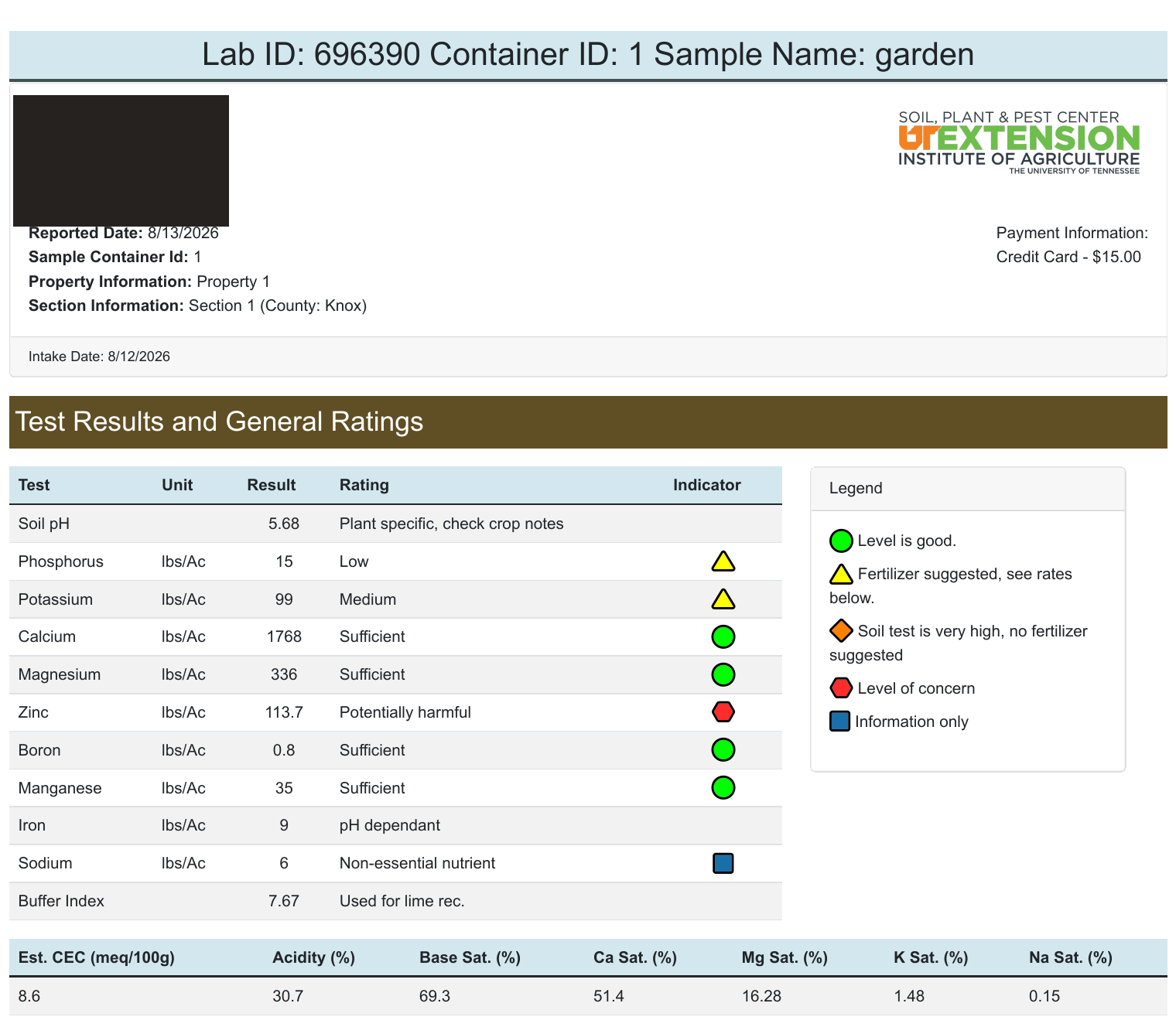
The report came back on the thirteenth. A pH of 5.68 against a target of 6.1, so the hydrangea was right in direction and only a little pessimistic. Calcium and magnesium both sufficient, with magnesium proportionally high, which decided the kind of lime: calcitic, not the dolomitic kind that most garden centers sell as plain “garden lime,” because dolomitic would add magnesium the soil already has. Phosphorus low, so bone meal. Potassium middling, so a small dose of potassium sulfate. Nitrogen deferred to spring, when there’s something planted to use it.
And zinc, flagged red at more than a hundred pounds an acre. That was the rubber mulch, confirmed by the lab. The honest read was a plant-vigor concern rather than a food-safety panic, and the response was three levers I was already pulling: get the rest of the rubber out, raise the pH so the zinc locks up, and build organic matter to bind what’s left. Retest in a year. Meanwhile, buckwheat went into two beds on the ninth as a first cover crop and was sprouting by the thirteenth.
August 14
The pivot
Then the grass told me what it was. The sod that had been so brutal to lift by hand was established bermuda, which spreads by deep rhizomes and surface runners, regrows from fragments, and was already coming back in the cleared beds. No cover crop outcompetes it. Wendell reframed the summer’s difficulty as information about the enemy rather than a verdict on the gardener, and the plan reset.
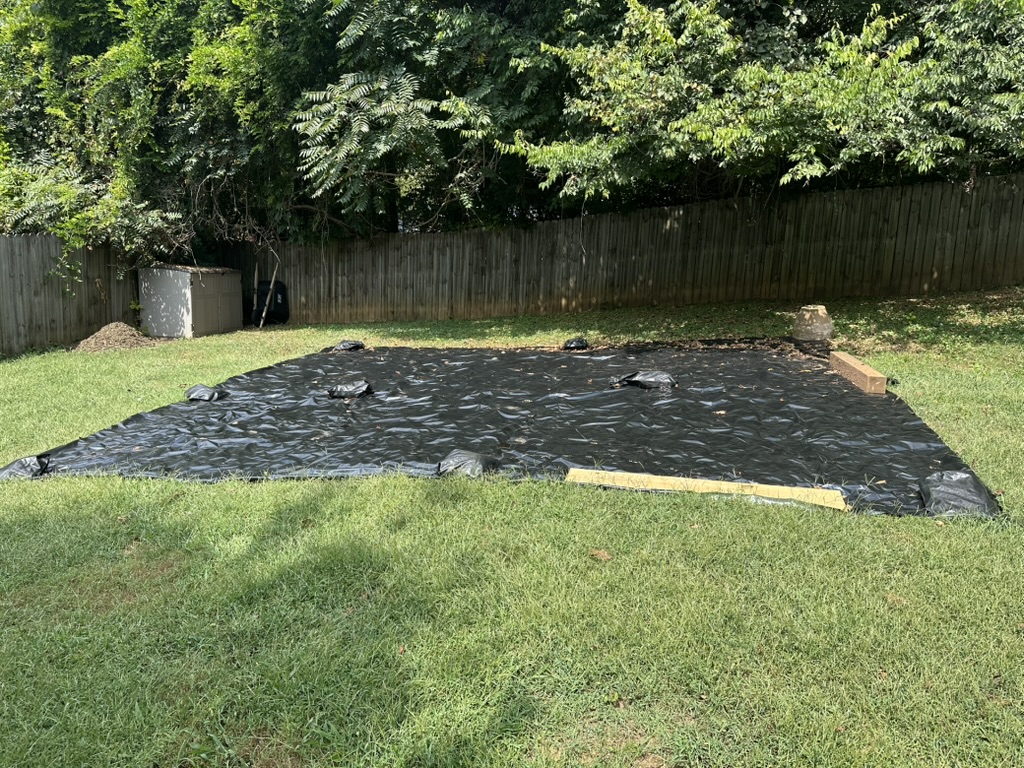
The new plan of record: cover the entire plot (beds, paths, and a two-foot border, about 360 square feet) with a light-excluding tarp, and leave it down through the winter to starve the bermuda in the dark. The buckwheat would be turned under; the cover-crop soil building would wait a year for clean ground. That was the honest cost of the reset, and I accepted it. Bed three got cleared that morning and the top layer of rubber raked out, with the crumb that had already been churned into the clay acknowledged rather than sifted, because sifting clay by hand is a back injury with a plan.
August 26
Put to bed
Amendments first, then the cover, in that order on purpose, so the lime gets a long, moist reaction window under the tarp instead of a dry autumn. About thirteen and a half pounds of calcitic lime, three pounds of bone meal, half a pound of potassium sulfate, forked once into the top few inches of all three beds. After this, the beds are no-dig. The buckwheat went under with it.
Then the tarp, over everything, held down with sandbags I made from the bermuda sod itself, which will cook into loam by spring. Under the cover, the pH drifts toward 6.1, the phosphorus and potassium settle in without winter rain flushing them out, the zinc locks up as the pH rises, and the grass starves. That closed the establishment arc: from a string in the grass in June to a fully prepared, covered plot in eleven weeks of mornings. No winter action needed.
Spring 2027
The pick-up list
Pull the tarp and run down the bermuda survivors, digging the rhizome rather than pulling the tops, because one winter is a knock-back, not a kill. Add nitrogen at planting. Cardboard and mulch the paths and the perimeter, with free arborist chips if the timing lines up, and open the sod bags to put finished loam back on the beds. Tomatoes and peppers go in bed three, the one with the most rubber history; roots and leafy things in the cleaner beds. Retest the zinc. Resume the cover crops in future off-seasons, now on clean ground.
Still open: whether there’s enough sun in the front stone bed for melons, and a conversation about that at home; winter quotes from an arborist for the invasives in the back corner; where the water comes from; and a kneel-at-the-edge reach test before committing to any dense planting. None of it is urgent. The garden is doing the only thing it needs to do this winter, which is nothing, under a tarp, on purpose.