
The bookshelf
The voices behind the letters, and what’s open on the nightstand
These letters lean on a handful of voices, and I’ve tried to wear the learning lightly — you can feel them behind the prose without ever being sent to a footnote. But if a particular letter moved you, you may want to go to the source and read it on its own terms. That’s the richer way: not my blend of these traditions, but the real, distinct thing each one is. None of this is required to keep what the letters handed you. It’s just here if you want to pull the thread.

Recommendations
Books I’d hand you
Not everything I’ve read, and not ranked. The ones I’d put in your hands if you asked.





Currently reading
On the nightstand
Currently reading
 No Future Without Forgiveness
 Patty Lyons' Knitting Bag of Tricks: Over 70 sanity saving hacks for better knitting
 The Need to Be Whole: Patriotism and the History of Prejudice
 The Unsettling of America: Culture & Agriculture
 American Prometheus: The Triumph and Tragedy of J. Robert Oppenheimer
 The Deviant's War: The Homosexual vs. the United States of America
Want to read

Pulled from my Goodreads shelf, refreshed a few times a day.
Listening
Still turning over
A few shows and one episode I keep coming back to. Not a listening log, just the ones that are still working on me.
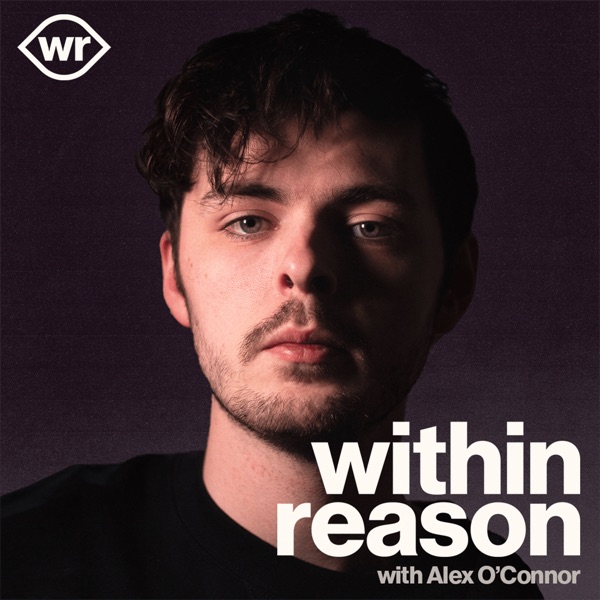
Within Reason
Alex O’Connor
Long, patient conversations about God, ethics, and what a person can honestly claim to know, run by someone who argues carefully and changes his mind in public. I listen for the discipline more than the conclusions.

What Now?
Trevor Noah
Noah asking people how they actually live with what they’ve made. What keeps turning over: how often the honest answer is about belonging, not achievement.

The Diary of a CEO
Steven Bartlett
Long interviews with people who have built something. The frame is ambition; the episodes I keep are the ones that turn out to be about the body, sleep, and attention, and what they cost.
On Being
Nick Offerman with Krista Tippett · “Working with Wood, and the Meaning of Life” · February 2023
A woodworker and Krista Tippett on hands, attention, and what a made thing teaches. The founding image of these letters, said out loud by someone else.
The voices
Who the letters lean on
Listed once, in the order they first appear. A sentence on what the letters take from each, where to start, and which letters lean on them. Polyglot, and in no order of rank.
Wendell Berry
the body as something given, not a machine to drive; “membership,” his word for how we belong to each other and to a place; the doctrine of labor-saving, where “faster” quietly crowds out “better”; the sentence that we can live only at the expense of other lives; and the scar as the knowledge you keep.
Start with: “The Body and the Earth,” in The Unsettling of America; the Port William novels (The Wild Birds); “Horse-Drawn Tools and the Doctrine of Labor Saving,” in The Gift of Good Land; Home Economics; and “Damage,” in What Are People For?
Letters12511192830The Zhuangzi — and Daoism
the cook whose blade never dulls because he follows the openings already in the ox; wu wei, non-forcing; the Dao, the impersonal Way the Tao Te Ching says “cannot be spoken”; and fǎn, the returning that the old texts call the very motion of the Way.
Start with: the Zhuangzi, “The Secret of Caring for Life” (Burton Watson or James Legge); and the Tao Te Ching, chapter 40 among the rest.
Letters14920Attachment, and the secure base (John Bowlby, Mary Ainsworth)
the held child explores more, not less; acceptance comes first, and it frees the venturing.
Start with: Bowlby, A Secure Base; or any clear introduction to attachment theory.
Letters23569Martin Buber
“I-Thou” and “I-It,” two ways of standing toward the world; and the “eternal Thou” behind every real meeting.
Start with: I and Thou (1923) — short, strange, worth the slowness.
Letters39Paul — the letters
one body with many members; the parts that can’t say to one another, “I have no need of you.”
Start with: 1 Corinthians 12, Romans 12, Ephesians 4.
Letter5Dietrich Bonhoeffer
“cheap grace” against “costly grace”: a gift freely given, never earned, that nonetheless calls you into a whole life.
Start with: The Cost of Discipleship.
Letter6The word-histories
discipline from disciple (a learner, not a punishment); rule from regula (a straightedge, not a rod); metanoia, a turning rather than groveling; limen, the sill under a doorway, behind liminal and subliminal.
Start with: any good etymological dictionary, which will take you further than I did.
Letters781826The rooms of recovery
“one day at a time,” “progress, not perfection,” “keep coming back”: the hardest-won wisdom anywhere on the slip and the return — borrowed here with gratitude, and without pretending an ordinary slip is the same as theirs.
Letters829Kristin Neff
self-compassion: meeting your own falling-down with kindness rather than contempt is the faster road back, not the soft option; her map has three parts — self-kindness, common humanity, mindfulness.
Start with: Self-Compassion.
Letters814Serbatik — and Maha Guru Jerry McCleary
a martial art that calls itself first a self-awareness art, “for the student to get to know themselves”; its primary rules — “When in the void, go straight,” and “Don’t Be There; Move the Target; Defend the Line,” in that order — are credited here as taught, along with the mat as the one place a correction arrives too fast to argue with. Turning those rules onto the inner courtroom, connecting the void to Sun Tzu, and the struggle-versus-pain reading are my own extensions, not teachings of the art.
Start with: the art itself — it’s taught in person, under the International Serbatik Federation, and there’s no book I can hand you; the door is the training floor.
Letters131621Evelyn Tribole and Elyse Resch
eating in correspondence with your own body: learning what your hunger is actually for rather than overriding it, and, by extension, reading what feeds you rather than obeying a menu of “good” and “bad.”
Start with: Intuitive Eating — less a plan to follow than a way of listening.
Letters1122Ubuntu — and Desmond Tutu
umuntu ngumuntu ngabantu, the Nguni proverb usually rendered “a person is a person through other persons”: belonging not as a loss of self but as the ground of it — a philosophy older and wider than any one teacher, tied to no single faith, which the late Archbishop spoke in a Christian key out of South Africa’s reckoning with apartheid.
Start with: Tutu, No Future Without Forgiveness; and for the line most people know — “I am because we are” — John Mbiti, African Religions and Philosophy: it’s his, not Tutu’s.
Letter15Miyamoto Musashi
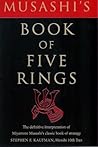
“Do not think dishonestly,” the first of the nine precepts that close the Ground Book of The Book of Five Rings: honesty as the rule that sits over the rest, the discipline that keeps a first-person reading from lying to itself.
Start with: The Book of Five Rings, the Ground Book, in Victor Harris’s translation — the wording above is his.
Letters1625Sun Tzu
the five things that let one side prevail, from the chapter on attacking by stratagem — rendered freely and turned inward, so the meddling sovereign becomes your own over-analyzing mind.
Start with: The Art of War, chapter 3, “Attack by Stratagem”; the Lionel Giles translation is old enough to be freely available.
Letter16James Clear
the ice cube heated from twenty-five to thirty-one degrees with nothing to show for it, and then: “all the action happens at thirty-two degrees.” The plateau of latent potential is the stretch where effort is stored but unseen; the valley of disappointment is what it feels like to stand there.
Start with: Atomic Habits, chapter 1.
Letter18John Mark Comer — and the Rule of St. Benedict
the trellis: a rule of life as the form a climbing thing grows on, not a cage. Comer’s frame is explicitly Christian, a life ordered toward God; the letters borrow only the picture, which carries on its own.
Start with: Practicing the Way; and behind it the Rule of St. Benedict, the old original he’s recovering rather than inventing.
Letter26The Blue Zones (Gianni Pes, Michel Poulain, Dan Buettner)
the picture of communities associated with unusual length of life, where the long life looks like a byproduct of lives that move, eat enough, and belong. Held here as resonance, not proof: the underlying extreme-age records have been seriously challenged.
Start with: Buettner’s work with National Geographic — and, right beside it, Saul Justin Newman’s research on those age records, so you hold the picture the way the letters do.
Letters2527Dean Ornish
the one harder claim these letters make about a body: a randomized trial showed measurable regression of coronary heart disease through intensive lifestyle change — a real finding about how a heart can heal, consulted as a reference, never as a promise of years.
Start with: the Lifestyle Heart Trial (The Lancet, 1990) and its five-year follow-up (JAMA, 1998).
Letters2527The Eighth and Ninth Steps
the amends: a list of everyone you harmed, a willingness to make it right, and then the direct repair wherever possible — except where making it would only injure them. An act you take, not an absolution you’re owed. Borrowed for the posture and never the stakes; what those rooms carry is life-and-death, and an ordinary harm is not the same.
Start with: the book Alcoholics Anonymous, the chapter “How It Works,” where the Steps are printed.
Letter29The Gospel of John — the grain of wheat
“unless a grain of wheat falls into the earth and dies, it remains just a single grain; but if it dies, it bears much fruit”: the life that becomes more than itself by being given. Offered for the reader who hears it, with the same thing said in plain ecology for the reader who doesn’t — both doors open on the same ground.
Start with: John 12:24, and the chapter around it.
Letter30Take whichever of these is yours, or none. Letter 9 made the case that they don’t all agree — and that you don’t have to resolve it. Reading them on their own terms is how you honor that: each is its own distinct answer, not a dialect of one creed. Go meet the ones that call to you.